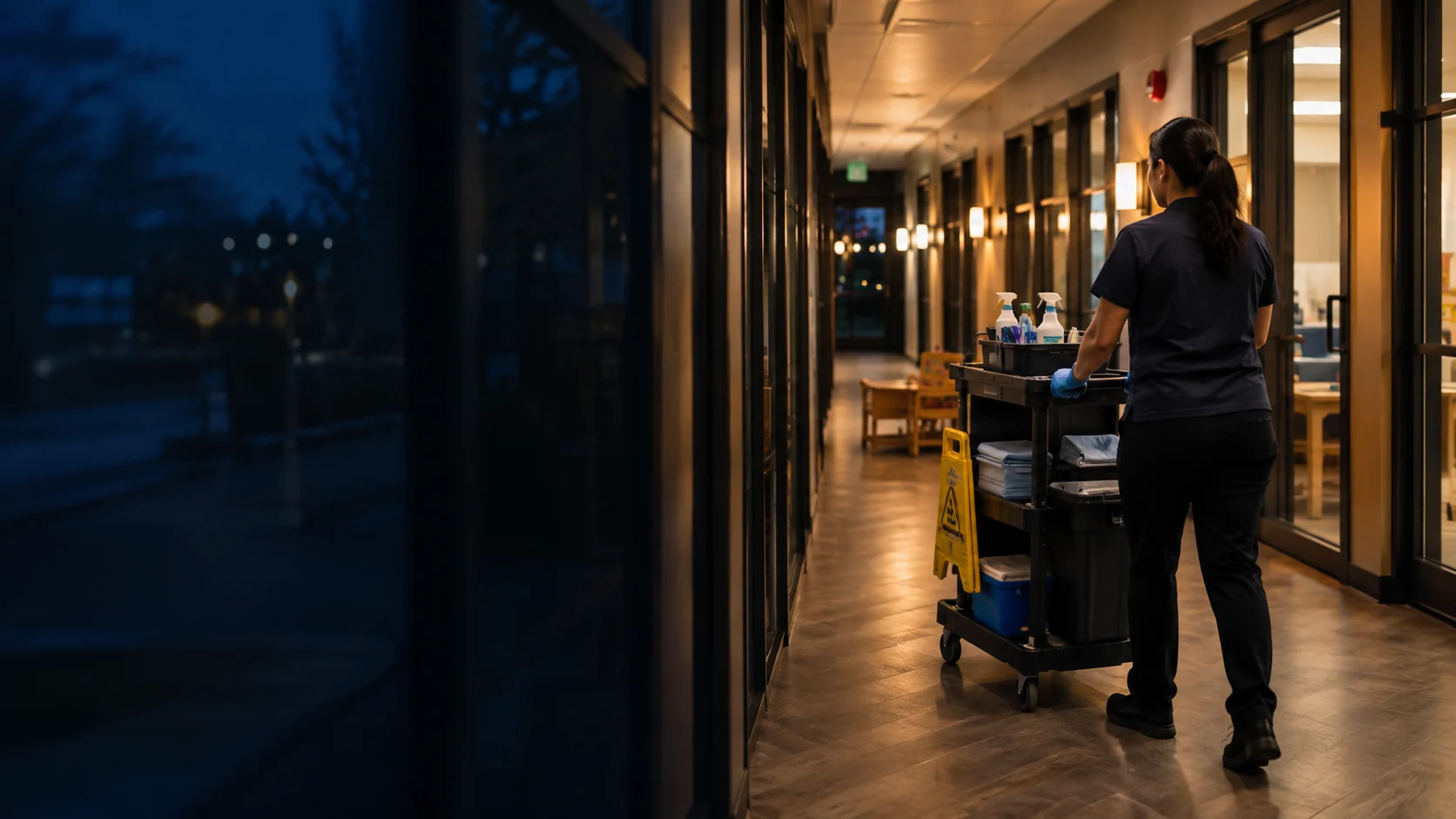
Write down what each visit is meant to cover
List the rooms and agreed tasks with their frequency. Make recurring work distinct from optional or periodic services, and confirm who can approve changes to the agreement.
Choose the review points before service starts
Discuss observable surfaces and fixtures in the actual property. The website’s 3D scenes are illustrative; the proposal and provider agreement establish the real tasks and any reporting method.
Keep an exception specific
An occupied room, a locked door and an incomplete task require different follow-up. Record the location, the relevant scope item and what prevented or affected the work.
- Room or area involved
- Agreed task or access condition
- Contact receiving the issue
- Next action and completion record
Communicate without exposing private information
A useful description need not include customer records, children’s information or photographs of personal belongings. Agree how issues will be shared and any limits on image-based reports.
Review changes to the routine
When hours, room uses or responsibilities change, update the task list and schedule together. Keep the current version available to the business contact and provider rather than relying on an old conversation. Keep product and surface instructions alongside the task list. Use WorkSafeBC’s explanation of labels and safety data sheets when discussing the information relevant to products proposed for the property.